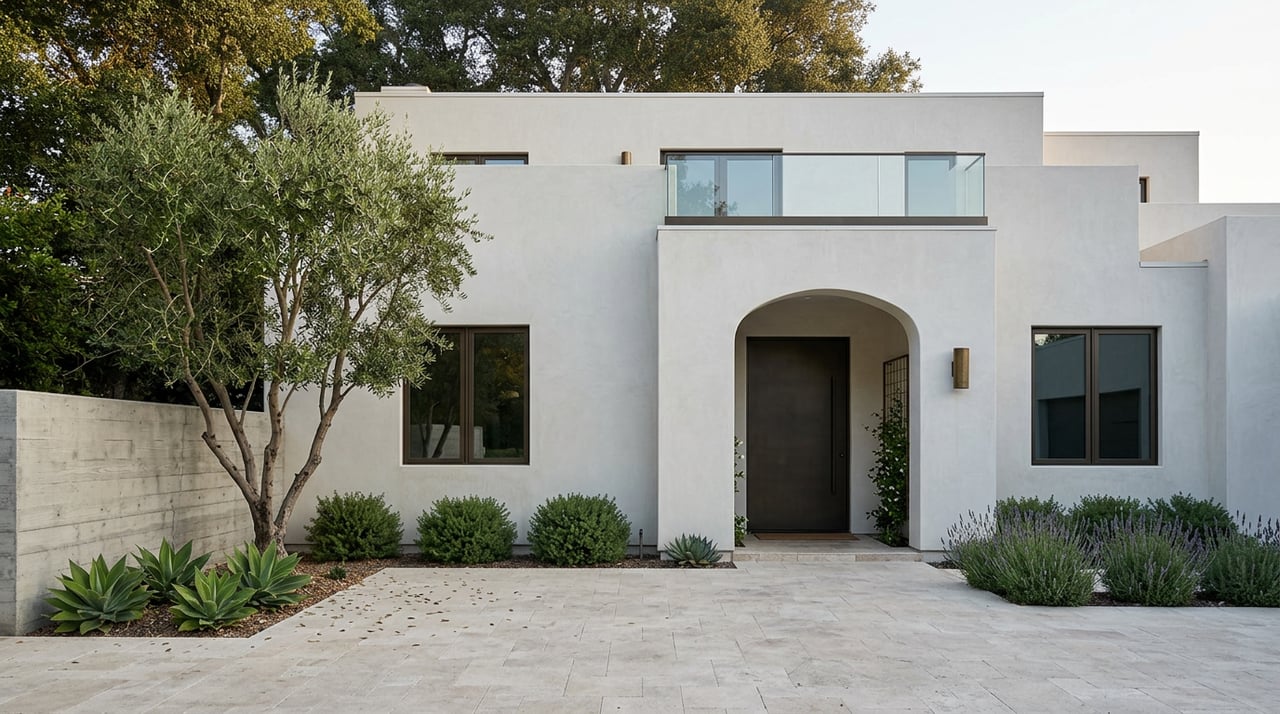
Two Carlsbad Listings, Same Price. One Line Item Splits Them Apart.
Pull up two Carlsbad listings priced at $1.6 million each. One sits in Carlsbad Village, a block off State Street. The other sits in La Costa Greens, on a cul-de-sac inside a gated loop of newer construction. Same price. Same square footage, close enough. A buyer comparing them on the numbers a portal shows will treat them as roughly interchangeable.
They are not. One of these homes almost certainly carries a Mello-Roos special tax that the other does not, and that single line item can add hundreds of dollars a month to the actual cost of owning it. The list price told you nothing about which one.
Carlsbad gets talked about as if it has one housing market. It doesn't. The city's median sale price sat near $1.4 million in February 2026, but the three-month window ending June 2026 put the median closer to $1.6 million, up 2.2 percent year over year, with homes selling in about 26 days and price per square foot running around $729. Those aren't contradictory numbers. They're evidence of a market that spans four ZIP codes and a housing stock that ranges from 1950s coastal cottages to master-planned communities finished in the last decade, all folded into a single citywide figure.
A median blends a $2.5 million ocean-view property in 92008 with a $900,000 townhome inland. It tells you almost nothing about what any specific neighborhood will actually cost you to carry month to month. For that, you need to look at a tax mechanism most portals don't surface at all.
California's base property tax rate under Proposition 13 is 1 percent of assessed value. That part is uniform statewide. What isn't uniform is a second layer: Mello-Roos, formally the Mello-Roos Community Facilities Act of 1982, which lets a city or developer form a special district and sell bonds to pay for the roads, schools, and utilities a new community needs before it's built. The homeowners inside that district repay the bonds through an annual special tax, often for 20 to 25 years, added directly to the property tax bill.
Here's what that looks like in dollars. On a $900,000 home carrying $4,000 a year in Mello-Roos, the effective tax rate climbs from the base 1.1 percent to roughly 1.55 percent, which works out to about $333 extra every month. Multiply that across a 25-year bond term and the gap between "this house has Mello-Roos" and "this house doesn't" isn't a rounding error. It's a mortgage-sized decision hiding inside a tax line most buyers don't ask about until escrow.
The reason this matters so much in Carlsbad specifically is geographic. Communities built out under bond financing since the 1980s carry it. Neighborhoods that were already established before that financing model took hold generally don't.
| Neighborhood | Housing era | Mello-Roos | 2026 price band | Anchor |
|---|---|---|---|---|
| Carlsbad Village / West Carlsbad | Pre-1980s coastal core | Generally none | Luxury and ocean-view homes in 92008 routinely exceed $2.5M | Walkable to State Street, the historic Santa Fe Depot, and the COASTER rail platform |
| Bressi Ranch | Built out 2000s | Present in most phases | Single-family homes roughly $1.3M to $2.2M | The Square at Bressi Ranch, anchored by Trader Joe's, Sprouts Farmers Market, Pizza Port, and Bird Rock Coffee Roasters |
| La Costa (Oaks, Ridge, Greens, Valley) | Mixed ages, newer phases dominant | Present in the planned phases | Broad range, from condos in the high $600s to estates above $3M | Built around the Omni La Costa Resort's golf and tennis complex |
| Aviara | Gated master-planned, fully built out | Present | Attached homes $1.2M–$1.6M, detached from near $2M, custom estates $4M–$6M+ | Park Hyatt Aviara and the Arnold Palmer-designed Aviara Golf Club, near Batiquitos Lagoon trails |
| Calavera Hills / Robertson Ranch | Newer master-planned | Present | Roughly $1.3M to $2.2M for single-family | Lake Calavera's trail network |
Read that table and the pattern is hard to miss. The neighborhoods with the newest infrastructure, the ones with the community pools, the branded village centers, and the golf-adjacent amenity packages, are also the ones carrying the ongoing bond payment that built them. The older coastal core skips that tax entirely, not because it's cheaper, but because it was built before the financing tool existed.
Here's the wrinkle that trips up buyers who think they've done their homework: Mello-Roos doesn't apply uniformly even within a single community. Bressi Ranch as a whole carries it across most of its market-rate phases, but Mulberry, an income-restricted enclave built by Lennar within Bressi Ranch, is exempt. Same neighborhood, same walk to The Square, zero Mello-Roos on that specific parcel.
That means the neighborhood name on a listing is a starting point, not an answer. Two homes a few streets apart in the same master-planned community can carry different tax obligations depending on which phase they were built in and which bond district they fall under.
A $1.6 million listing in Carlsbad Village and a $1.6 million listing in La Costa Greens are not the same monthly payment. They just share a sticker.
If you're weighing Carlsbad neighborhoods against each other, the list price is the least useful number on the page. Before you compare two homes on cost, do this instead:
Do that math on both listings in your comparison set before you decide the sticker price is the deciding factor. Often it isn't.
Does Mello-Roos ever go away? Yes. It's tied to the repayment schedule of a specific bond, typically 20 to 25 years, and disappears once the bond is retired. A home in a community built out in the early 2000s may have far less remaining on its assessment than one built more recently.
Is Mello-Roos tax deductible like regular property tax? That answer depends on your specific situation and isn't something to assume either way. Check with a CPA before you build it into your affordability math.
Does buying in Carlsbad Village guarantee I'll avoid it entirely? Generally yes, since that housing stock predates the financing structure, but "generally" isn't a substitute for pulling the actual tax bill on the specific address you're considering. Verify the parcel, not the reputation of the neighborhood.
The citywide median will keep moving every quarter, and it will keep telling you less than you think it does. What separates a Carlsbad home's real monthly cost from its list price is a tax district boundary you can't see from the street, and the only way to know which side of it a specific property sits on is to ask before you fall for the listing photos. If you're comparing Carlsbad neighborhoods and want someone to run that comparison with you parcel by parcel, not just median by median, Laura Valente can walk you through what a given address actually costs to carry, month over month, before you write the offer.



We pride ourselves in providing personalized solutions that bring our clients closer to their dream properties and enhance their long-term wealth. Contact us today to find out how we can be of assistance to you!