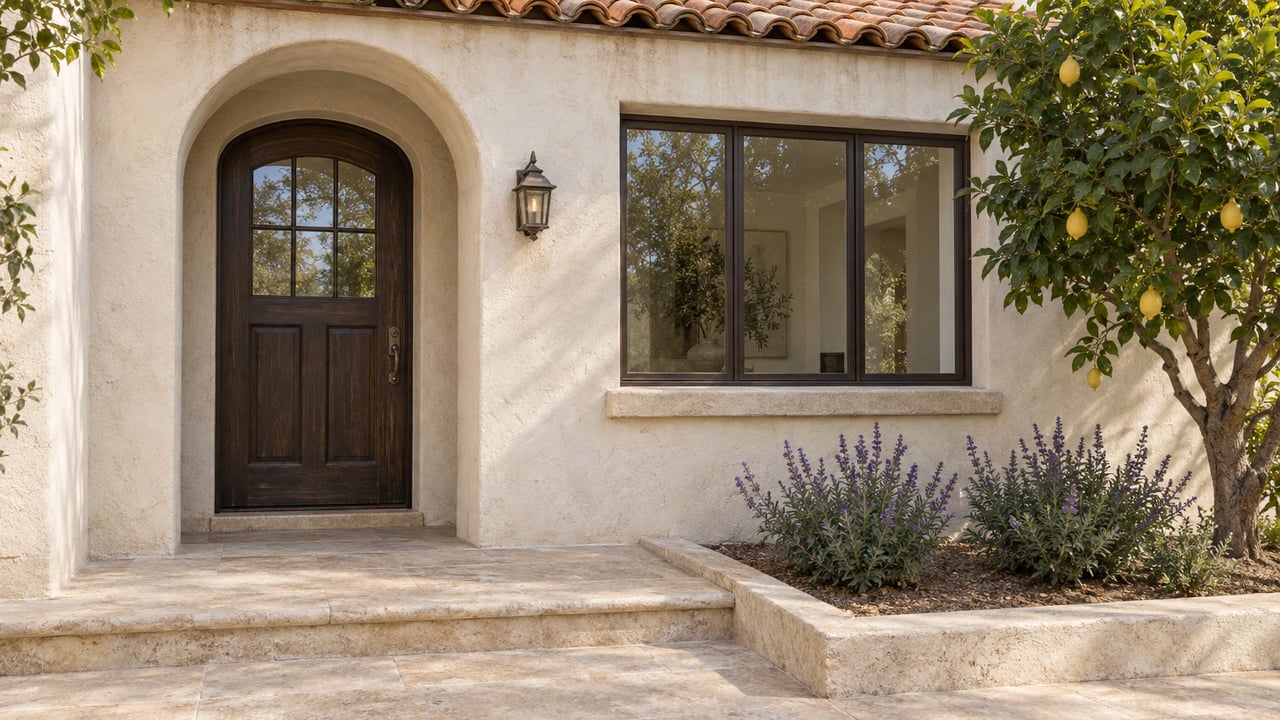
What a Recorded Mills Act Contract Is Worth in a Mission Hills Sale, and to Whom
When a historic Mission Hills home sells with a Mills Act contract already recorded, the buyer's property tax usually isn't based on the price they paid. The contract stays with the house. The assessor values the home from what it could earn in rent, under a state formula, and the purchase price serves mainly as a comparison point. Getting a contract on a home that doesn't have one is slow, has a set calendar and comes with a citywide cap. For a buyer comparing older homes in 92103, the contract on title can be worth more than the original windows.
Across San Diego County, Mills Act owners get an average 71% discount on their property taxes, according to a San Diego Union-Tribune analysis published March 22, 2026. The same analysis lists Mission Hills among the city neighborhoods where Mills Act properties are most concentrated. That 71% is a countywide average. It tells you little about any single house. The figure that matters for a single house comes from how the county assessor treats it after a sale.
The State Board of Equalization's guidance for valuing restricted historic property says that on each lien date, the taxable value is the lowest of three numbers:
A sale still creates a new base-year value at roughly the purchase price. The BOE guidance says that number will typically be higher than the restricted value, so it won't be the one enrolled. The assessor uses it mainly for the three-way comparison, and it becomes the starting point if the contract ever goes into nonrenewal. The guidance also says a property under contract doesn't get a supplemental assessment when it changes hands.
That's why the contract tends to favor the buyer. A seller who has owned the home for decades may already have a low factored base year under Proposition 13, so the gap between that and the restricted value can be small. A new buyer's base year resets to today's price. The restricted value is what keeps the bill from following that reset. So the same recorded document can save the incoming owner much more than it saved the outgoing one.
The restricted value isn't fixed. It's recalculated every year from the rent-based formula, so it can go up or down. Before an offer, ask the San Diego County Assessor how the parcel is valued now, and ask a tax professional what that means for you.
A recorded Mills Act contract runs with the land. The new owner has the same rights and obligations as the person who signed it and doesn't reapply because the title changed. The obligations transfer along with the tax treatment.
The City of San Diego's conditions include maintaining the property to the Secretary of the Interior's Standards, following a work plan written for that specific property, and keeping the historic exterior visible to the public. The City monitors contracts every five years, and its monitoring program can contact a new owner after a sale. The contract adds a year to its term each year it renews. If the owner or the City sends written notice of nonrenewal, the contract stays in force for the rest of its existing term, and nonrenewal carries no penalty. Cancellation for breach or deterioration is different. It requires a noticed public hearing and carries a fee of 12.5% of the property's current fair market value, figured as if the contract didn't exist.
The Union-Tribune points out that a contract can cost an owner money if the required work costs more than the tax discount. It profiles a North Park Craftsman owner who estimates he has spent $250,000 on renovations, including roof, windows, paving and porch columns, some of them to meet his contract. In a Mission Hills purchase, the work plan belongs in the same due-diligence folder as the inspection report. It tells you which projects are already required, and that helps you price a remodel you had in mind for the kitchen or the street-facing facade.
If the home you want has no contract, the calendar decides when you can apply. The City requires local historic designation first, and the home must be designated by December 31 of the year before you apply. Applications are accepted only from January 1 through March 31. A complete application needs a 10-year maintenance and improvement plan with cost estimates showing the tax savings will go back into the property.
| Step | Inheriting a recorded contract | Starting from an undesignated home |
|---|---|---|
| Historic designation | Already in place | Required first; City fee $3,444.36 |
| Research report | Already done | Often over 100 pages; consultants can charge $10,000 or more |
| Mills Act application | Not needed | $1,334.24; accepted January 1 to March 31 only |
| Monitoring fee | Paid on the five-year cycle | $893.67 at signing and every five years |
| Place in line | None | Processed in the order received against a $200,000 annual cap |
Sources for the table are the City's Mills Act fact sheet, with fees updated July 1, 2025, and the Union-Tribune's March 2026 reporting.
The cap is a limit on how much property-tax revenue the City gives up each year through new approvals. Under City Council Policy 700-46, applications are handled in the order received until the $200,000 limit is reached. Anything over the limit rolls to the next fiscal year unless the Council approves going above it. The City's most recent annual report counts 51 new contracts from October 2024 through September 2025, out of 2,075 participating properties. It doesn't say whether the cap was reached, and the Union-Tribune found that the City tracks only new approvals, not its total lost revenue.
Here's how that plays out for a buyer closing this fall. If the home isn't designated by December 31, 2026, it can't apply in the 2027 window, and its first chance would be January 2028. Even then, a contract isn't guaranteed. Save Our Heritage Organisation's executive director, Bruce Coons, described the order of operations to the Union-Tribune:
"In San Diego, you pretty much have to be restored before you can get the Mills Act."
The Union-Tribune notes that qualifying is much easier for a home in a City-designated historic district that is counted as contributing to the district's character. Mission Hills has two such districts, according to Mission Hills Heritage. The Mission Hills Historic District started with 75 homes on the 1800 block of Sunset Boulevard, Sheridan Avenue and Lyndon Road. A 2014 annex added 99 homes between Sunset Boulevard, Witherby Street, Hickory Street and St. James Place. The Fort Stockton Line district covers 107 homes along parts of Fort Stockton Drive, West Lewis Street and Pine Street.
Outside those districts, the path is the individual nomination described above. Mission Hills Heritage has also proposed a Marine View district on the National Register, roughly bounded by University Avenue, Eagle Street, Brookes Avenue, and Winder and Wellborn Streets. The group's June 2025 announcement says National Register listing alone wouldn't make owners eligible for Mills Act contracts. Local designation would still be needed. The announcement projected a filing in late 2025 and a decision in 2026. We couldn't find a public record of whether that filing or decision has happened as of October 2026. The Union-Tribune also reported in March 2026 that the City had stalled on naming new historic districts because of staff shortages.
Designation also affects what you can build. The Package A ordinance adopted in March 2026 keeps Complete Communities Housing Solutions unavailable in designated historic districts, with narrow exceptions outside Mission Hills. Under AB 1061, an urban lot split under SB 9 still can't be done on a designated landmark property, and it can't require demolishing or altering a contributing structure in a historic district. If you're weighing a Mills Act contract against future density on the lot, decide which matters more before you make an offer.
The City Council approved Package A of its "Preservation and Progress" update on February 24, 2026. Among other changes, it requires an HRB designation review to end if there's no final decision within 90 calendar days of the first hearing, unless the owner asked for a continuance. Mills Act revisions are part of Package B, which a City staff report from October 2025 had targeted for fall 2026. The City's project listing now projects that the full update will be finished in 2027. The Union-Tribune reported that City officials don't expect sweeping changes to the program. For now, the cap, the application window and the designation requirement remain in effect.
Does a buyer have to reapply for an existing contract? No. A recorded contract binds future owners, and the City's guidance doesn't require reapplying after a sale.
Does the Mills Act value move to my next home if I sell? No. The County Assessor says a Mills Act value doesn't transfer to a seller's replacement home.
What should I ask for before making an offer? Ask for the recorded agreement, its work plan, whether either side has sent a nonrenewal notice, and the date of the last five-year monitoring visit. Then ask the Assessor how the parcel is valued today.
If a Mission Hills home with a Mills Act contract is on your list, Laura Valente can review the recorded agreement and work plan with you and map which required projects fit the renovation you have in mind before you write an offer. If you're selling one, an instant home valuation is a good place to start, and from there we can show buyers what that contract means for them.
This article is general information, not legal, tax or financial advice. Consult a qualified professional about your situation.





We pride ourselves in providing personalized solutions that bring our clients closer to their dream properties and enhance their long-term wealth. Contact us today to find out how we can be of assistance to you!