Ever see two similar downtown condos with HOA fees hundreds of dollars apart and wonder why? You are not alone. In San Diego’s 92101 high-rises, fees can vary widely based on amenities, services, and the building’s long-term plan for repairs. In this guide, you will learn what HOA fees typically cover, the usual ranges in downtown towers, how to compare buildings fairly, and what to look for in the HOA disclosures before you buy. Let’s dive in.
What HOA fees are and why towers cost more
HOA fees are the recurring dues you pay to cover shared building costs, insurance, management, and reserves for future repairs. In downtown San Diego high-rises, these fees are often higher than in single-family neighborhoods or low-rise condos.
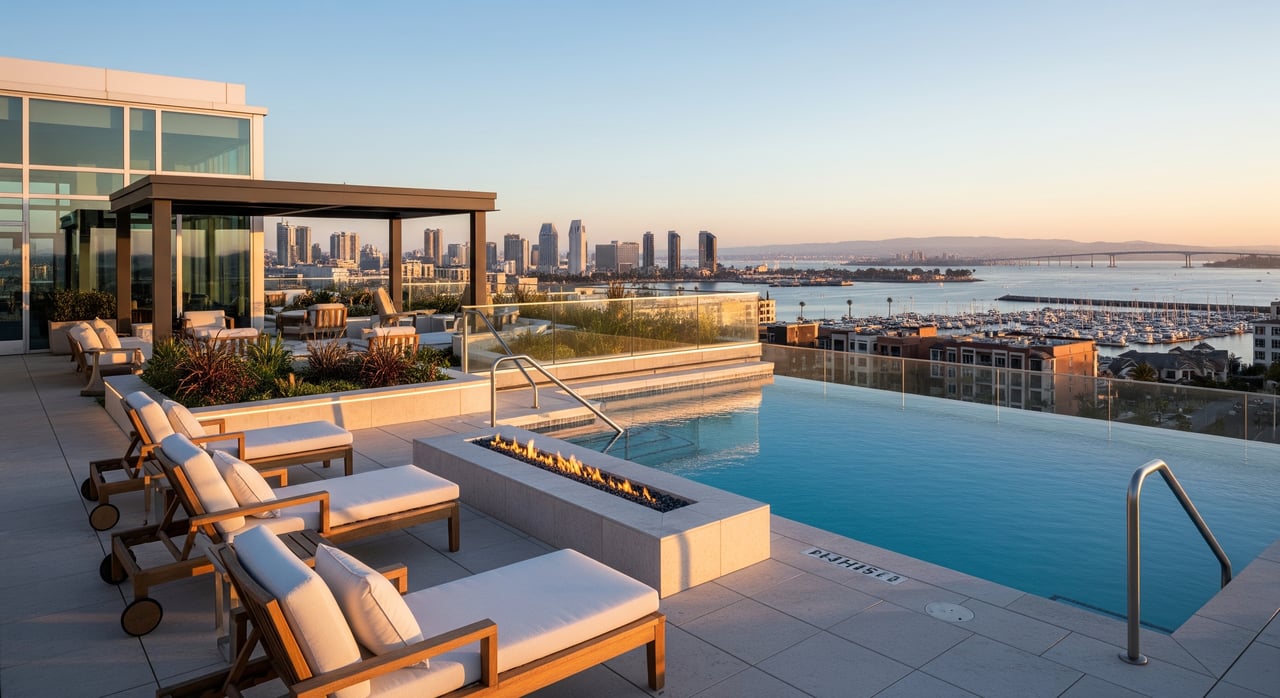
Tall buildings have more complex systems to maintain. Elevators, fire and life safety systems, rooftop mechanicals, and parking structures add cost. Many 92101 towers also offer premium amenities like pools, fitness centers, and concierge or front desk staffing. Utilities and insurance for high-rises tend to run higher as well, and there are more inspections and compliance requirements.
Typical HOA fee ranges in 92101
Use these ranges as a starting point, then verify numbers in the current MLS listing and the building’s resale packet.
- Many downtown condos: roughly 400 to 1,500+ dollars per month.
- Mid-range towers: frequently 500 to 1,000 dollars per month.
- Luxury towers with full services: commonly 800 to 1,800 dollars per month or higher.
Another way to compare is by cost per square foot per month. In many high-rises, a rough range is about 0.40 to 1.50+ dollars per square foot per month. Multiply by the unit’s size to estimate monthly dues.
- Sample math: If a 900 square foot unit has 900 dollars in HOA dues, that equals 1.00 dollar per square foot per month, or about 12 dollars per square foot per year.
Important: a direct fee comparison only makes sense when you account for what the dues include. Parking, utilities, cable or internet, storage, and the number of bedrooms or parking spaces can change the picture.
What your fees usually cover
Your dues typically fund two buckets: everyday operating costs and long-term reserves for big repairs.
- Operating expenses usually include building exterior and common area maintenance, elevator service and inspections, landscaping, pools and spas, common area utilities, trash and recycling, security or concierge staffing, management company fees, janitorial services, the master insurance policy for common areas, and any taxes or assessments on common elements.
- Reserve contributions set aside money for larger, less frequent projects like roof work, façade repairs, elevator replacements, or parking structure rehabilitation.
- You may see other charges for submetered utilities, extra parking or storage, guest parking, or premium services like valet if offered.
- Items not covered typically include your unit’s interior finishes and contents, which you insure with an HO-6 condo policy, and any separately metered utilities. Mortgage payments and personal taxes are not included.
How amenities and features drive fees
Certain features in 92101 towers can meaningfully increase dues because they add ongoing costs.
- Full-time staffing, such as concierge or front desk, adds payroll, which is often one of the largest line items.
- Pools, spas, hot tubs, and fitness centers require maintenance, chemicals, equipment service, and extra cleaning.
- Parking structures can be costly to maintain and may need waterproofing, concrete repair, or mechanical system work over time.
- Rooftop gardens and landscaping involve irrigation and upkeep.
- Security systems and monitoring contracts add to monthly operating costs.
Some inclusions can reduce your monthly out-of-pocket for other bills. For example, when dues include water, trash, or basic cable or internet, your separate utility bills may be lower. Onsite management and maintenance can also streamline repairs in common areas.
Reserves, assessments, insurance, and financial health
A building’s financial health matters as much as the fee amount.
- Reserves are the savings account for big projects. A reserve study estimates the life and cost of major building systems and recommends how much the HOA should save each year. Underfunded reserves increase the chance of future special assessments.
- Special assessments are one-time charges when the budget and reserves cannot cover a major project. Common triggers downtown include elevator overhauls, parking garage repairs, waterproofing, façade work, and mechanical replacements.
- Insurance: the HOA carries a master policy that generally covers common areas and the building shell. Coverage types and limits vary. Confirm whether it is “bare walls” or more inclusive, then line up your HO-6 policy to cover interiors, improvements, personal property, and liability.
- Health indicators to review: reserve study and current reserve balance, operating budget trends, owner delinquency rate, recent or planned special assessments or loans, management company tenure, and the building’s size relative to fixed costs. Repeated budget shortfalls, multiple recent assessments, major litigation, or visible deferred maintenance are warning signs.
How to compare two condos fairly
Use a simple framework so you are comparing value, not just fees.
- Gather the numbers. Note monthly dues, unit square footage, parking and storage, and what utilities or services are included.
- Normalize by size. Calculate dues per square foot per month. Example: 800 dollars divided by 800 square feet equals 1.00 dollar per square foot per month.
- Adjust for inclusions. Give credit if the fee includes water, trash, basic cable or internet, or multiple parking spaces. Consider whether parking is deeded or assigned and if there are extra fees.
- Evaluate amenities you will use. A staffed lobby, large gym, or resort pool adds cost. If you value and use them often, higher dues may be worth it. If not, a simpler building might fit better.
- Check the building’s financials. Review the reserve study, current reserve funding, operating budget, delinquency rate, and any assessments. Strong reserves can reduce future surprises.
- Look at trends. Ask about typical annual increases and what drove recent changes. Read recent board minutes for planned projects.
- Consider building scale. Smaller associations can have more variability per unit for fixed costs and projects.
Buyer checklist: disclosures and red flags
Request the full resale packet early and review before you remove contingencies. Here is what to ask for and what to watch.
Essential documents to request
- CC&Rs and bylaws.
- Current annual budget and the most recent financial statements.
- Reserve study and documentation of reserve balances.
- Board meeting minutes from the last 6 to 12 months.
- List of current or planned special assessments and capital projects.
- Insurance declarations for the master policy, including limits and deductibles.
- Rules and regulations, including rental and pet policies.
- Management company information and contract details.
- Owner delinquency report, if available.
- Any pending litigation or claims.
Five red flags
- Large, recent, or frequent special assessments.
- Reserve balance well below the reserve study’s recommendation.
- Major pending lawsuits or insurance claims.
- High owner delinquency rates.
- Recurring budget deficits or rapid fee increases without clear plans.
Sample calculation to compare two units
- Unit A: 900 dollars per month for 900 square feet. Dues equal 1.00 dollar per square foot per month. Includes water and trash, one deeded parking space.
- Unit B: 750 dollars per month for 700 square feet. Dues equal about 1.07 dollars per square foot per month. No utilities included, parking is an additional 100 dollars per month.
- Even though Unit B has lower dues at first glance, the per square foot cost is higher and you need to add the parking and utility costs to your monthly budget.
Factor HOA into your total cost
When you budget for a downtown condo, add HOA dues to your mortgage, property taxes, unit utilities, HO-6 insurance, and any parking or storage fees. If the master policy is bare walls, you may want more robust HO-6 coverage for interiors and improvements. Ask the HOA for typical annual increases so you can plan ahead.
Investor note: rental rules matter
If you plan to rent the unit, review the HOA’s rules and CC&Rs for any rental restrictions. Some communities limit short-term rentals or have specific lease terms and registration steps. Confirm the rules early so your investment plan aligns with the building’s policies.
Local guidance for 92101 buyers
Downtown San Diego offers an amazing lifestyle, and the right building will match how you live and what you value. A careful review of fees, inclusions, reserves, and rules will help you choose a home that fits your budget today and protects you from surprises later.
If you want a second set of eyes on a resale packet or help comparing buildings and amenities, reach out to Laura Valente. As a boutique, design-forward advisor focused on downtown and coastal San Diego, Laura blends market insight with a practical eye for long-term building health. When you are ready to tour or review documents, contact Laura Valente for personalized guidance.
FAQs
What is a typical HOA fee for a 1-bedroom in 92101?
- Many mid-range towers often fall between 500 and 1,000 dollars per month, but a better test is cost per square foot per month. For an 800 square foot unit at 0.40 to 1.50+ dollars per square foot, you might see about 320 to 1,200+ dollars, depending on inclusions and amenities.
How do amenities like concierge and a pool affect dues?
- Full-time staffing, pools, spas, gyms, and parking structures add operating and maintenance costs, which usually increases dues. If you will use these amenities often, the higher fee may deliver more value for you.
What is a reserve study and why does it matter?
- A reserve study estimates the life and replacement cost of major components and recommends annual savings. Strong reserves lower the risk of special assessments for big projects like elevator overhauls or garage repairs.
What is a special assessment in a condo HOA?
- It is a one-time charge to owners when reserves and the operating budget cannot cover a needed capital project, such as façade repairs, waterproofing, or mechanical replacements.
What insurance do I need when buying a downtown condo?
- The HOA carries a master policy for common areas and the building shell. You still need an HO-6 policy for your unit’s interiors, improvements, personal property, and liability. Confirm whether the master policy is bare walls or more inclusive to right-size your HO-6.
How can I compare HOA fees fairly between buildings?
- List what each fee includes, calculate dues per square foot per month, adjust for parking and utilities, and review the reserve study, budget, and any assessments. Weigh the value of amenities you will actually use and check recent board minutes for planned projects.