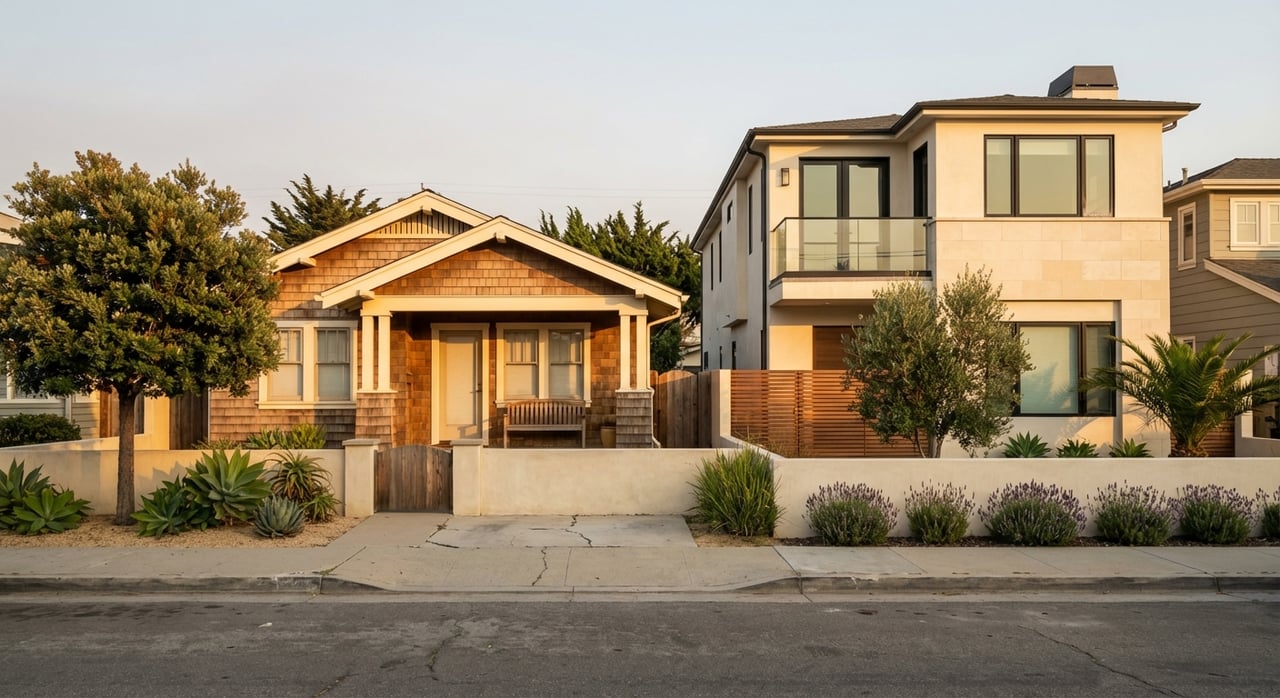
Guide to Oceanside Home Styles: Bungalows vs New Builds
Torn between a classic beach bungalow and a shiny new build in Oceanside? You are not alone. Both offer a distinct lifestyle, and the right choice depends on how you live today and what you want to maintain over time. In this guide, you will learn the key differences in layout, systems, outdoor living, coastal rules, and long-term risk so you can move forward with confidence. Let’s dive in.
Oceanside remains an active North County coastal market, with home values broadly in the low to mid $800Ks. A recent aggregator snapshot places the local home value index near $845,762 as of January 31, 2026. Different sources report slightly different medians based on timing and sample, so it helps to focus on the most current local data when you are ready to write an offer.
You will find many older beach bungalows near the pier and in South Oceanside. Newer construction often appears as planned communities and infill townhomes a bit farther from the immediate surf line or on higher density parcels. That pattern shapes your day-to-day lifestyle, parking, and access to amenities.
Classic Oceanside bungalows lean into charm and scale. Many are single story or one-and-a-half stories with low-pitched roofs, broad eaves, and inviting porches that bridge the indoors and outdoors. Floor plans are compact and connected, often with built-ins and period details that feel timeless.
In Oceanside, many intact beach bungalows are about 600 to 1,300 square feet with one to three bedrooms on modest lots. Current examples near the beach and in South Oceanside often clock in under 1,000 square feet, which suits buyers who prize walkability and character over extra storage or a bonus room.
Newer Oceanside homes and townhomes tend to emphasize open kitchens, larger primary suites, attached garages or dedicated parking, and flexible bonus spaces. Smaller townhomes often start near 1,200 square feet, while detached new single-family homes can extend past 2,000 square feet. Multi-story plans are common where land is tighter.
You can expect modern systems, energy features, and code-forward construction. In California, most new residential construction follows the state energy code, known as Title 24, and many new homes include solar photovoltaic systems or electric-ready infrastructure in line with current code cycles. For a plain-language primer on performance targets, see this overview of Title 24 energy requirements.
In a coastal town, outdoor living is more than a patio. Beach width and access can shift seasonally, and local public works shape what you experience on the sand. Oceanside manages beach sand and the harbor entrance with annual dredging by the U.S. Army Corps when suitable sand is available, plus a Sand Compatibility and Opportunistic Use Program that places sand on local beaches.
These efforts can improve beach width and access in the near term, but shoreline position still changes over time. If you are weighing a home close to the surf, learn how the City approaches erosion and nourishment here: Oceanside coastal management and dredging. Then walk the block at high tide, and if you can, visit during King Tides to see how the ocean meets the neighborhood.
Coastal exposure increases routine upkeep. Plan for more frequent exterior paint, vigilance on metal corrosion, and timely HVAC coil servicing due to salt air. Roof life can be shorter than inland environments, especially on older materials or flashing details.
Older bungalows may require one-time capital projects, like a roof replacement, sewer line work, or electrical upgrades, along with targeted inspections for termites or, on pre‑1978 homes, for potential lead-based paint or asbestos in specific materials. These are common finds in inspections and help you budget with eyes open.
New builds shift some costs to the HOA. You will likely pay monthly dues for landscape, amenities, and exterior maintenance defined in the CC&Rs. If solar is included, factor in basic PV upkeep over time. Always review the HOA budget and any reserve studies to understand how the community plans for major repairs.
Flood and coastal hazard checks belong on every coastal buyer’s list. Start with the FEMA Flood Map Service Center to see your zone, then ask the listing agent about any required flood insurance or past claims.
In California’s Coastal Zone, permitting and redevelopment can come with added conditions. The California Coastal Commission encourages avoiding siting new development in hazardous areas where feasible, and local coastal programs often require owners to assume risk or limit shoreline armoring in certain approvals. Those conditions can affect how you remodel and your long-term plans. To understand the policy backdrop, see the Coastal Commission’s sea-level rise guidance.
Choose a beach bungalow if you want porch culture, a smaller footprint you can make your own, and the daily joy of walking to the sand. You will trade some storage and take on more hands-on maintenance, especially on older systems, but you gain character and a close-to-everything feel.
Choose a new build if you want open-plan living, modern systems, parking, and a lower-maintenance start. You will trade some private yard space and may live a bit farther from the surf, but you gain warranties, energy efficiency, and community amenities that make life simple.
When you are ready to compare real addresses, let a local, design-forward advisor help you weigh the details that matter. If you want a clear, concierge path from search to design and even turnkey rental management, connect with Laura Valente to explore your best-fit options in Oceanside.

We pride ourselves in providing personalized solutions that bring our clients closer to their dream properties and enhance their long-term wealth. Contact us today to find out how we can be of assistance to you!