La Jolla Oceanfront Vs Village Living For Buyers
If you are choosing between oceanfront La Jolla and life in the Village, you are not just picking a home. You are picking the rhythm of your everyday life. For many buyers, that decision comes down to one simple question: do you want your routine shaped more by the shoreline or by walkable convenience? In this guide, you will see how each option feels, what tradeoffs matter most, and how to decide which side of La Jolla fits the way you want to live. Let’s dive in.
La Jolla is a coastal community defined by ocean bluffs, beaches, canyons, and hillsides. It is also about 99% built out, which means buyers are usually choosing within an established setting rather than a fast-growing one.
That matters because oceanfront and Village living offer two very different experiences inside the same community. The difference is not just location on a map. It is how often your day is shaped by beach access, views, shops, dining, and everyday services.
Oceanfront living in La Jolla is about immediate contact with the coast. You are closer to the water, the views, and the visual drama that make this part of San Diego so distinctive.
Areas tied closely to the shoreline include places near La Jolla Cove, La Jolla Shores, and Windansea. Each beach has its own feel, and that can influence the kind of daily experience you have as a homeowner.
La Jolla Shores is a sandy beach that runs about one mile and includes a permanent lifeguard station, parking, restrooms, showers, a playground, and the only beachfront boat launch within San Diego city limits. If you picture easy beach days and frequent time on the sand, this setting may feel especially practical.
Windansea has a more secluded feel and is known for rocky conditions and surf orientation. The shore break can be moderate to severe, so the appeal here is often more about atmosphere and coastal character than broad, easy beach use.
La Jolla Cove is a very small beach set between sandstone cliffs. It offers a dramatic backdrop and a strong sense of place, which many buyers find hard to replicate anywhere else.
Oceanfront homes tend to be view-driven. Your day may start with marine-layer views, bluffside walks, and a shorter path to the water than to errands or cafés.
That can be a major advantage if you value scenery, outdoor access, and the emotional pull of the coastline. It can also mean your home feels more connected to public shoreline activity, especially in popular visitor areas.
The Village is the commercial and civic core of La Jolla. The city defines it as the area bounded by Prospect Street, Girard Avenue, and Torrey Pines Road.
If oceanfront living is shaped by the coast, Village living is shaped by convenience. You are closer to shops, cafés, galleries, restaurants, and local services, which can make everyday life feel easier and more flexible.
The Village is the stronger fit if you want a walk-to-everything lifestyle. Local district information describes it as a place with boutiques, art galleries, specialty shops, bookstores, and restaurants.
The area also benefits from civic amenities within La Jolla, including the La Jolla Recreation Center and the La Jolla/Riford Library. For buyers who want errands, coffee, dinner, and services to feel close at hand, the Village often stands out.
Village living usually feels denser and more urban in scale than the oceanfront edge of La Jolla. You may trade some seclusion for the ease of stepping outside and having more of your routine nearby.
For many buyers, that tradeoff feels worth it. If you enjoy being able to walk to dining, browsing local shops, or handling day-to-day tasks without relying on the car, the Village can be a very strong match.
When buyers compare these two lifestyles, a few themes come up again and again. The right choice depends less on which one is objectively better and more on which one supports your priorities.
Oceanfront usually wins on uninterrupted water views and direct beach access. Village living usually wins on walkability and street-level convenience.
If your ideal morning includes the shoreline outside your window, oceanfront will likely feel compelling. If your ideal day includes stepping out to coffee, dining, and services on foot, the Village will likely feel more natural.
Oceanfront privacy can be strong when a property has setback or elevation, but shoreline homes may also sit near areas with regular public use. The city notes that coastal bluffs can be treacherous and that places like Point La Jolla are popular destinations, so public activity is part of the ownership context in some coastal locations.
Village homes can feel more private from a beach-use standpoint, but they may be more exposed to pedestrian and vehicle activity because they sit closer to the commercial core. In other words, each setting has activity, just of a different kind.
The Village has a stronger mixed-use and multi-family profile. Planning rules in this part of La Jolla cover commercial and multi-family development, and the area includes office commercial, visitor commercial, and community commercial uses such as restaurants, specialty shops, banks, and medical or dental services.
That often translates into a broader range of condos, townhomes, and mixed-setting residences. Oceanfront homes, by contrast, are often more singular in character because the coastline itself shapes the lot, view corridors, and the experience of the property.
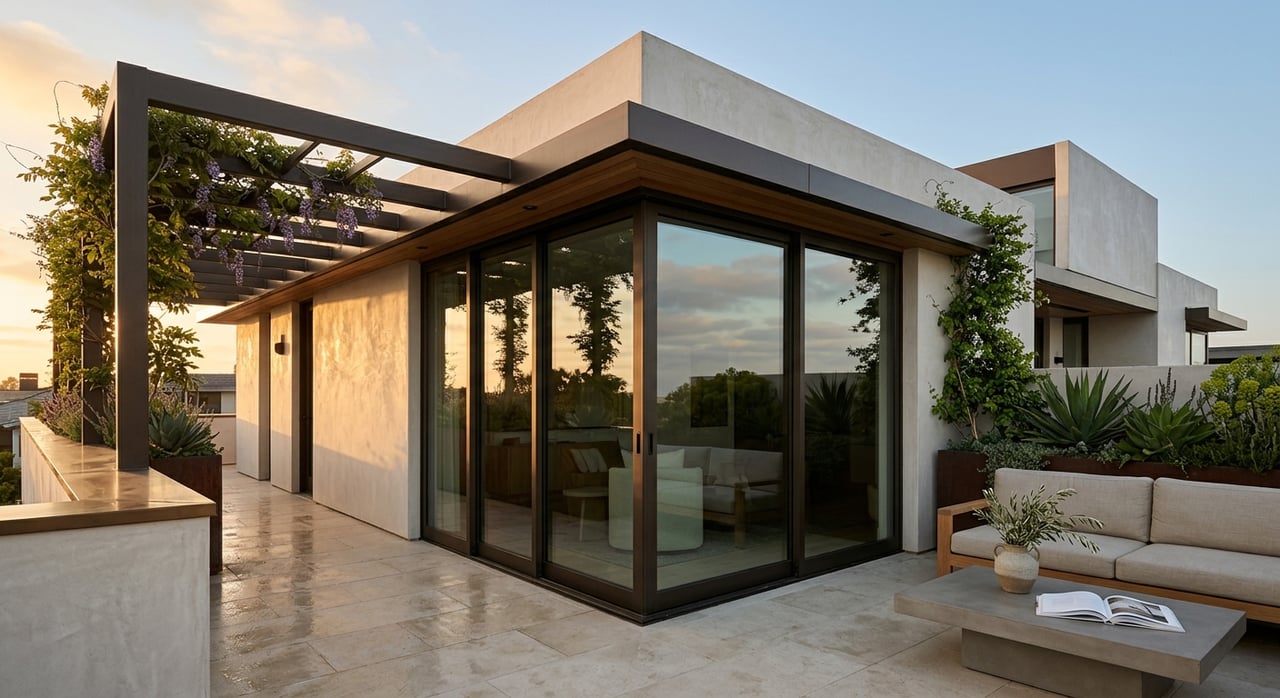
Buyers who care about design should pay attention to how each setting shapes the home itself. In La Jolla, architecture is not just about style. It is also about scale, topography, and how a property relates to its surroundings.
The Village tends to feel more compact and built-in. The community plan recommends gradual transitions in scale between commercial buildings and nearby residential areas, which helps explain why this area often reads as more layered and urban.
For you as a buyer, that can mean a home that feels integrated into a lively district rather than set apart from it. If you appreciate architecture that connects closely to street life and convenience, this can be appealing.
Oceanfront homes feel more shaped by terrain, bluffs, and the pull of the horizon. The design focus often turns outward toward water views, terraces, and the experience of the site.
That setting can be visually spectacular, but it also comes with more direct environmental exposure. If you are evaluating an oceanfront property, the design conversation should include not only beauty and layout, but also how the home relates to bluff conditions and coastal use nearby.
Lifestyle matters, but practical details matter too. In La Jolla, those details can be very different depending on whether you are buying along the coast or in the Village.
Oceanfront buyers should look closely at coastal regulation and environmental exposure. The City of San Diego says sea level rise in San Diego could reach another 3.6 to 7 feet by 2100, with the potential for more flooding and faster coastal erosion.
La Jolla planning documents also note that the California Coastal Act requires a Local Coastal Program for designated coastal areas. That does not mean oceanfront ownership is a bad choice. It means you should approach it with clear eyes and careful review.
Focus on questions like these:
Village buyers should pay closer attention to building rules, parking, and how directly a property fronts commercial activity. Because the Village is the core for shopping, dining, and services, the convenience often comes with more pedestrian and vehicle movement.
That does not make it less desirable. It simply means you should think carefully about where the home sits within the Village and how much activity feels comfortable for your lifestyle.
Focus on questions like these:
If you are drawn to scenery first, oceanfront La Jolla may be the better match. It is often the stronger choice when views, beach access, and a more dramatic coastal setting matter more than walkable errands.
If you want convenience, flexibility, and a broader range of property types, Village living may suit you better. It is often the stronger fit for buyers who want daily life to feel easy, connected, and centered around local amenities.
In many cases, the best choice comes down to how you want your home to support your routine. A beautiful view and a beautiful lifestyle are not always the same thing, and the smartest buyers take time to define both.
If you want a thoughtful, design-minded perspective on which La Jolla setting fits your goals, Laura Valente can help you compare properties with both lifestyle and long-term usability in mind.

We pride ourselves in providing personalized solutions that bring our clients closer to their dream properties and enhance their long-term wealth. Contact us today to find out how we can be of assistance to you!