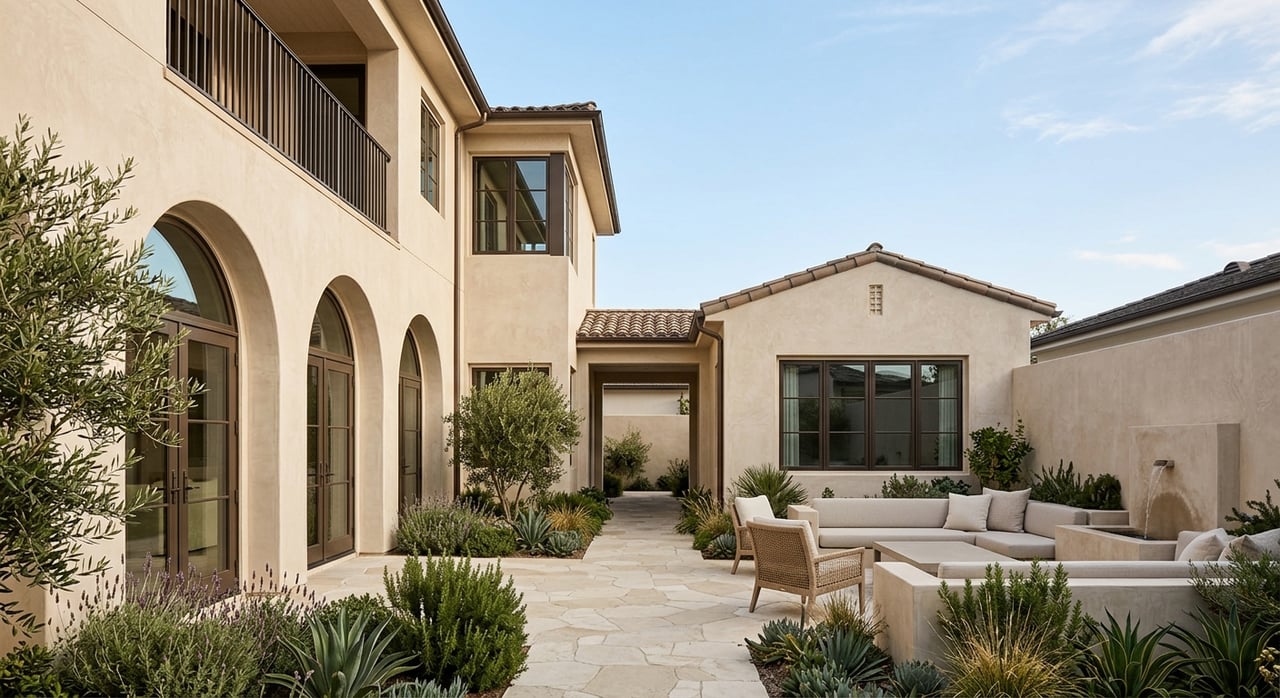
La Jolla ADU Potential: Is Your Home Ready?
Wondering whether your La Jolla property has room for an ADU? In a community that is largely built out, adding an accessory dwelling unit can be one of the few practical ways to create more living space, support multigenerational needs, or add long-term rental potential without changing the character of your home in a major way. The key is knowing that ADU feasibility in La Jolla is highly site-specific, especially with coastal rules, hillsides, and privacy concerns in the mix. Let’s dive in.
La Jolla is primarily residential and, according to the City of San Diego, about 99 percent built out. That means most housing change happens through infill rather than large-scale new development. For homeowners, that makes ADUs especially relevant because they can add function and value within an already established neighborhood pattern.
In practical terms, an ADU can serve several goals at once. You might use it for guest space, extended family living, or long-term rental income. In a market like La Jolla, where land is limited and homes often sit on complex sites, that flexibility can be meaningful.
Lots with a usable backyard are often the simplest starting point for a detached ADU. San Diego allows detached ADUs to encroach into side and rear setbacks, which gives rear-yard placement an advantage over front-yard placement in many cases. That can make layout, privacy, and access easier to solve.
Front-yard placement is more limited, even though the city allows one ADU of 800 square feet or less to encroach into the front-yard setback. So, a shallow lot is not automatically disqualified, but it may leave you with fewer options for privacy screening and a balanced site design.
Homes with an existing garage or accessory structure often deserve a closer look. Conversion opportunities can preserve the original setback pattern, which may reduce the visual impact compared with building a brand-new detached structure.
There is also a key sizing distinction. A conversion of an existing accessory structure or a portion of the main residence is not subject to the standard 1,200-square-foot maximum gross floor area limit. For some older La Jolla homes, that can open up useful possibilities.
La Jolla’s terrain is part of its appeal, but it can complicate ADU planning. Corner lots, street-facing side yards, and hillside parcels may still work, though they usually require more careful design and planning.
Street-side setbacks still apply, and exterior staircases and balconies cannot encroach into setbacks. On slope-adjacent or canyon-edge sites, the Fire Code Official may also require greater setbacks or brush-management adjustments. In many cases, topography matters just as much as lot size.
Every ADU and JADU requires a Building Permit. The review process is ministerial, which means the city reviews the application based on objective standards rather than a public-hearing approval process.
That said, San Diego updated its ADU and JADU regulations in 2025, and state guidance was updated again in 2026. So while the process is structured, the details can shift. It is smart to treat any ADU plan as current but parcel-specific.
This is one of the biggest issues in La Jolla. Some ADU and JADU rules are not effective in the Coastal Overlay Zone, and coastal properties may be subject to setback and landscape requirements established through the city’s Housing Action Package 1.0.
The city also notes that ADUs and JADUs in the non-appealable area may qualify for a City-issued Coastal Development Permit if the required findings are met. Because Planning staff coordinates with the California Coastal Commission to keep projects consistent with the Local Coastal Program and Coastal Act, coastal parcels often need more review than inland properties.
Parking is a practical concern in La Jolla, especially near the beach. Outside the Coastal Overlay Zone, no parking spaces are required for ADUs.
Inside the Coastal Overlay Zone, parking is also generally not required unless the property is in the Beach Impact Area of the Parking Impact Overlay Zone and outside a transit priority area. In that case, one off-street parking space may be required unless an exception applies. If you are converting a garage or carport, replacement parking usually is not required, but the coastal beach-area exception still matters.
If you are thinking about income potential, this rule is important. The City of San Diego states that an ADU or JADU may not be leased for fewer than 31 consecutive days.
That means these units are intended for long-term housing use rather than short-term vacation rental use. For homeowners and investors, it is best to evaluate an ADU as a long-term asset, not a short-stay strategy.
Standard ADUs offer more flexibility than JADUs. The city does not require the property owner to live on-site for an ADU.
For a JADU, the recorded owner must reside in the primary dwelling unit, ADU, or JADU. If your goals include flexibility for future use, it is worth understanding that distinction early.
In La Jolla, successful ADU design is about more than fitting a unit on the lot. Privacy, views, and architectural cohesion often have a major effect on how comfortable the space feels and how well it fits the property.
A smart approach usually starts with entries, windows, and outdoor areas. Careful window orientation, landscape screening, and thoughtful placement of doors and decks can reduce direct overlook into neighboring spaces and help the ADU feel intentional rather than squeezed in.
The strongest ADU projects tend to feel like a natural extension of the main residence. That is especially true in a design-conscious market like La Jolla, where buyers often notice proportion, materials, and how the structure sits on the site.
City rules also reinforce that discipline. ADUs count toward gross floor area and floor area ratio, and they must comply with height limits, building-code standards, and fire-separation and opening-protection rules. In other words, the best outcomes usually come from planning the ADU as part of the full property composition.
Decks, balconies, and exterior staircases can shape how an ADU looks and lives, but they are not afterthoughts. The city requires these elements to follow setback rules, so they should be built into the privacy and circulation plan from the start.
That is especially important on view-oriented or sloped La Jolla sites, where outdoor connections are valuable but space can be tight. Early design coordination can help you avoid a plan that works on paper but feels awkward in reality.
San Diego offers preapproved ADU plans, and applications using those plans are subject to a 30-day review. If your goal is a more predictable process, that can be appealing.
Still, a preapproved plan does not eliminate site-specific review. On coastal La Jolla parcels, the lot conditions and overlay rules can still determine whether a particular plan is a good fit.
Many homeowners assume ADUs are simple and low-fee because they are ministerial. That is not always the case.
San Diego’s guidance notes that school fees, the General Plan Maintenance Fee, development impact fees, and inclusionary housing rules in some higher-unit-count situations may still apply. It is wise to verify total project cost early rather than assume the permit path will be inexpensive.
If you are trying to size up a La Jolla property, a simple sequence can help you avoid wasted time and unrealistic expectations.
This order matters because La Jolla ADU feasibility is rarely about one rule alone. A lot may appear large enough, but setbacks, coastal review, or site design issues can still shape what is practical.
The most promising ADU candidates in La Jolla are often properties with a deep rear yard, an existing garage or accessory structure, or enough separation from neighboring homes to support privacy and fire-rule compliance. Those features tend to make layout and permitting more straightforward.
On the other hand, shallow lots, highly visible side-yard locations, and slope-constrained parcels may still be workable, but they usually require more careful design and more conservative expectations. That does not mean no, but it often means a more tailored path.
If you are weighing a purchase, preparing a renovation, or thinking about long-term property value, ADU potential should be analyzed as part of the whole asset. With the right site and the right plan, an ADU can create useful flexibility without losing the visual integrity that makes La Jolla homes so compelling.
If you want help evaluating a La Jolla property through both a real estate and design lens, Laura Valente brings a boutique, hands-on approach to understanding how a home can live better now and perform better over time.

We pride ourselves in providing personalized solutions that bring our clients closer to their dream properties and enhance their long-term wealth. Contact us today to find out how we can be of assistance to you!